
Harnessing The Power Of Emotions At Work
Key Takeaways
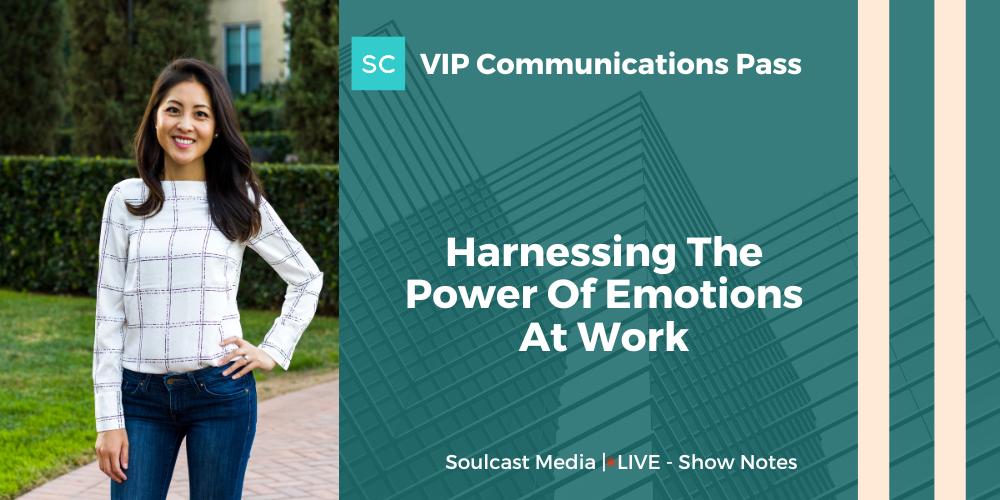
Our CEO and Founder, Jessica Chen, recently hosted a Soulcast Media | LIVE event on LinkedIn where she interviewed Work-focused storyteller, Author & Keynote Speaker, Liz Fosslien. They shared tips and personal stories about how navigate emotions in the workplace.
Here are the takeaways for VIP Comm Pass members:
- If you suppress all of your emotions, you will never discover the parts of your job that you really like.
- Harnessing the power of your emotions can help you enjoy your work life more.
- Every workplace has an emotional culture. This can be seen during meetings, whether people are speaking over each other, if someone dominates the conversation, or if people share about their personal lives, and this will impact what you feel safe expressing.
- Most people fall into two categories: an over-emoter or an under-emoter.
- If you're an under-emoter, the safest emotions to lean into are gratitude and praise.
- If you're an over-emoter, you may want to pause and give yourself some more space, to ensure you aren't letting a bad moment or frustration seep into every interaction.
- When it comes to uncertainty, it's important not to put pressure on yourself to feel fine when you are stressed or overwhelmed.
- An important thing you can say to yourself is, "I'm an individual learning too." This can help you shift your mindset from feeling like you need to do everything perfectly right away.
- Addressing the root of your anxiety can prevent you from frantically trying to fix the issue without getting to the bottom of why you are anxious. This will prevent you from burning out.
- Sitting with your emotions, understanding where they are coming from, and then taking action is a better way to handle uncertainty, overwhelm, and stress.
- Having an emotion is not the same as acting on it. There is a misconception that if you have emotions, you are acting irrationally.
- There is power in being proactive and sharing how you are feeling. For example, saying, I'm feeling really frustrated right now.
- You can also give your manager a clear way to help you. For example, you can say, I am really anxious about this upcoming presentation. Here is everything on my plate right now. Can you help me prioritize so I can ensure I'm getting everything that is important done, but also have enough time to work on my presentation.
- When stressed, you can ask yourself, what is the best thing that could happen? Or what is most likely going to happen? Rather than thinking about worst-case scenarios.
- When tensions are high, taking a break is a good way to reduce the tension. This can be circling back to respond until the next day or giving yourself time to process before trying to find a resolution.
- When confronting someone, try to anchor what you say in how it made you feel, rather than the person. For example, if someone interrupts you, you could tell them that when they interrupted you, it made you feel like your opinions didn't matter. This is much better than telling them they're rude because they will immediately take offense to that, and potentially escalate the situation.
- Liz said, your feelings aren't fact. Your feelings are valid, but they may be based on something you decided or your own interpretation.
- It's important not to judge yourself for feeling an emotion, but rather focus on finding the value in what the emotion is trying to tell you.
- Being proactive in our communications can prevent things from becoming worse than they are.
https://vimeo.com/924380604?share=copy
LISTEN TO THE PODCAST
WATCH THE SHOW
*As a VIP Communications Pass holder, you get access to these show notes we’ve organized for you, so you’ll always remember what was shared. No worries if you didn’t take down notes. This is for you to keep!*